How Can We Help Our Children Become Good Digital Citizens?

SOUTH LEARNERS CREATIVE SCHOOL, INC.
PARENTS’ CORNER – SEPTEMBER 2023
Parental Online Control
How Can We Help Our Children Become Good Digital Citizens?
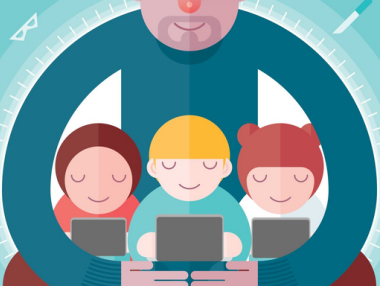 We are familiar with the term “citizen”, denoting a membership or affiliation to a specific location. Our children (and ourselves), as users of new technology, may be dubbed as “digital citizens”, because of how we utilize technology (gadgets, multimedia, internet and the like) in our everyday lives. Our children are even called “digital natives”, wherein kids younger than toddler age may already navigate platforms such as You Tube (their ability to move from Baby Shark to Coco Melon by themselves) made parents ask “How did they know about it?”, digital natives indeed.
Realizing the implications of the digital age, it is imperative that stakeholders (such as families and the school) should work hand in hand in ensuring the foundations of good digital citizenship of our children.
The parents and other family members have very important responsibilities: (1)being good role models (2) teaching and facilitating (3) guiding and correcting and (4)monitoring. Another important thing to point out is how OUR OWN PARENTING STYLES AND PHILOSOPHIES play an integral part in honing our children to becoming responsible digital citizens.
BEING A GOOD ROLE MODEL
“Your actions speak so loudly, I cannot hear what you are saying.”
― Ralph Waldo Emerson
This is a very striking quote from Ralph Waldo Emerson, as it reminds us to reflect about “TEACHING BY EXAMPLE”. Let us begin first with analyzing the gadget/ multimedia/ internet use of our family.
Note: For younger children, this may affect their attention, language acquisition and social skills development
Do we do this while eating or before sleeping?
Do we balance this with other activities?
Do we allow gadget-free quality time?
These are all tough questions, but as parents, we need to be good examples FIRST.Being a good role model is NOT only limited to the frequency and duration, but to the quality of use.
How do we stay away from bad sites or fake news?
How do we respond to aggressive posts?
How do we respond to “bashing” or “bullying” that can be seen in the multi media? Do we react or respond or ignore?
 TEACHING AND FACILITATING
Another important facet is teaching and facilitating our children to become more responsible “online”. It is a constant challenge for many, as we did NOT grow up with this kind of set up and environment.
*Teaching Control: Putting a designated “gadget time” to delineate that technology use is NOT a typical daily routine activity.
*Contract Setting: Gadget/technology use is a privilege. (I always tell my husband that it is not part of Maslow’s Hierarchy of Needs, not that Abraham Maslow will know of our situation now). Gadget may be offered as a positive reinforcement AFTER a task completion/ chore completion/ test period and the like. It is something that they earn, and not a right they are born with.
*Establishing Good Habits: Our kids love their technology use, there is no denying this reality. They can spend HOURS and HOURS yet not noticing it. As every household is DIFFERENT, EACH can discuss their expected schedule/s of gadget/internet use for the children.
GUIDING, CORRECTING, MONITORING
Love is trust. We trust our children.
However, as many parents (like myself) learned, it has to be JUDICIOUS as well.
We have to teach, guide and correct our children– about privacy, security and cyberbullying.
Below are some tips on how we can educate our children to become more responsible online.
- Explain WHY it is important for kids to not give personal information (ex: their home address or school), or post inappropriate pictures or videos of themselves online
- Explain to children WHAT sites are appropriate for kids and which ones are not, and WHY these sites must be avoided
- Emphasize that they should interact with everyone online WITH RESPECT. They should NOT engage in bad words, name-calling, rude conversations and other activities that can hurt the feelings of others. Furthermore, children must be taught on what is deemed funny versus disrespectful . One should not post anything, whether a photo, video, or comment, that could end up hurting someone’s feelings.
- Conversely, we have to teach our children WHAT to do when they are bullied online. Examples include (the FIRST step) telling a responsible adult and NOT engaging/participating in the bad situation
- For children exposed to social media: Inform and explain that what they see in the internet is NOT ALWAYS true. Sometimes there are people who are lying or using a fake identity in social media.
- Educate the children about the kind of photos that they share. They should know never to post nude pictures or anything that could be seen as suggestive, even if they are sending these pictures to someone that they know and trust. Explain the consequences if photos like these were stolen or shared without permission.
 Explain that real life interactions are more important and seek/ provide opportunities for these
 Explain that real life interactions are more important and seek/ provide opportunities for these
Truly, living in the “digital age” has its pros and cons. By teaching our children to become responsible digital citizens, we prepare them for the years to come.

Written by:
Kay Ezekiel T. Ravago, OTRP, LPT
Program Director, SLCS

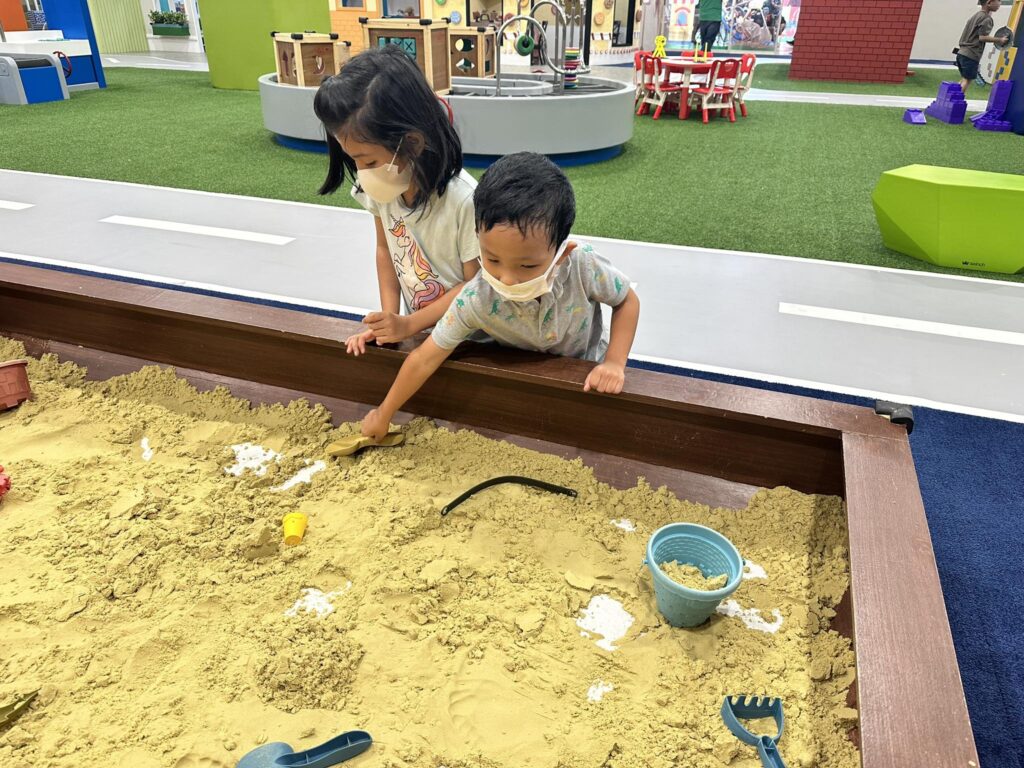
 Let us provide opportunities for movement. For this I would recommend two kinds—(a) gross body movements (arms, legs like walking, running, jumping, biking and sports like different ball games and swimming) (b) fine movements of hands and fingers—(drawing, coloring, writing, painting and the like).
 BE INTENTIONAL. As with different areas in life, being intentional with one’s goals and aspirations is important in crafting the steps towards its success. An analogy that I like best is comparing it with a school setting. In school, we have different learning academic goals (for different subjects in the class). Teachers would craft lesson plans , methodology and assessments to ensure academic goals are met. Going back to the home setting, goals like increasing independence and improving discipline would require intentional and concrete moves on the side of the parents. My favorite examples are (a) setting a structure and routine on the children’s everyday schedule (b) assigning age appropriate chores and (c) letting the children learn from the natural consequences of their actions. Meanwhile, as parents we have more challenging tasks, such as (a) being good role models – our actions and words should match what we teach to our children (b)continue learning- may it be through parenting books , forums or the like, or areas of improvement in our actual parenting routine.
 KEEP THE FAITH. Last but definitely NOT the least, is involving the true source of faith, hope and love, that is God. One of the most powerful lessons of the pandemic is holding on to our faith, and upholding the importance of having a strong spirituality in our family. In our household, we have established a regular family prayer time, and my kids learned the immeasurable importance of God and prayers in their lives, something that my husband and I aspire they would keep until they grow older. One of my favorite verses in the bible is the one from Proverbs 3:5 “ Trust in the LORD will all your heart and lean not on your own understanding”. The pandemic truly allowed us to show how trustworthy we are to God, as we embark on the different challenges brought by this incident.
 As parents, we are very much concerned of our children’s behavior. The truth is, however, we should also be concern of OUR own behavior towards them. This is something I further realized as an educator and as a parent. We cannot say “Do not follow the mistake that I have done” or “Be patient” or “Please wait”, when as adults we are frustrated a lot over adjustments in our waiting time. Truly, ACTIONS speak louder than words. I recently read a book entitled “How to Behave So Your Pre Schooler Will, Too”. This is written by Sal Severe, Phd. Like myself, he also had experience with kids (esp. those who need to improve behaviors in school and at home).
 We are models for our kids. ALL the TIME. ALWAYS. As previously mentioned, the family is the cornerstone of the society and provided the primary influence to children. My advice is to always “catch ourselves” on how we behave during challenging situations. For example, expressions like “S___!” can be something that can be picked up by kids. The worse is, they think its totally acceptable because mama and dada used it. Yes, potty mouth may be affected by television and popular media, but it can also be influenced by the people around our children (inc. our yaya, househelp, kids in the neightborhood, etc.)
 Statements such as above pose more harm than good. It teaches the kids how incapable and unworthy they are, instead of what must be done. It is easier said than done though. As a parent, you will really have MOMENTS that you will lose it. And when this happens alongside other stressful events in your life , one will really lose it! I am no expert in this as well. As a parent for 10 years and counting, I am also a work in progress- DAILY, EVERY MINUTE—to MASTER MY OWN emotions and be tactful not just to my kids but to everyone. As previously mentioned, my kids are ALWAYS watching!